



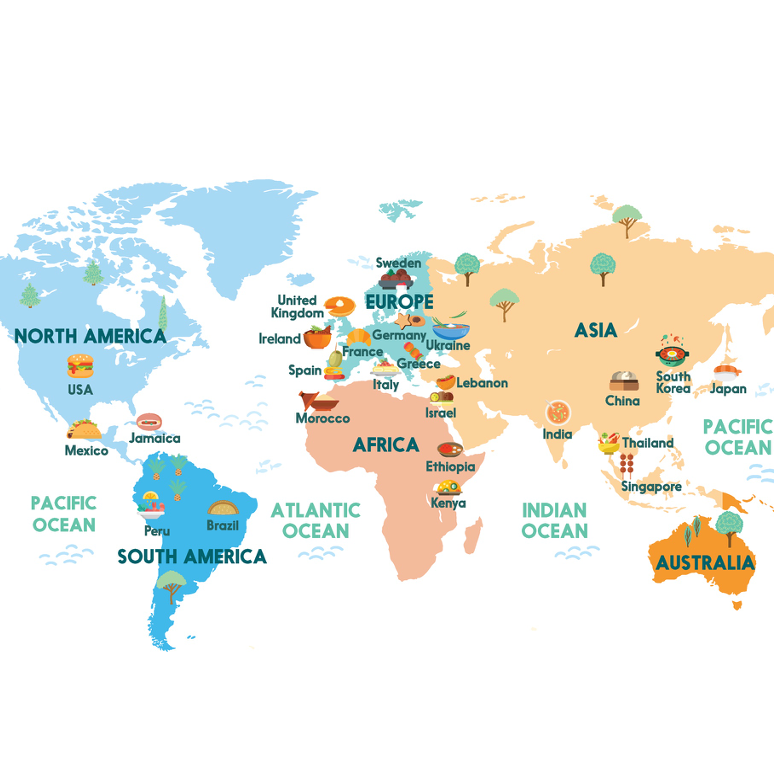



Not limited by nationality, religion, or culture, the harvest is celebrated with deep historical and traditional celebrations across the world. The harvest, or the successful gathering of crops from the land, is keenly important around the globe because of its ability to sustain life, increase prosperity, and fuel the future. While festivals around the world differ in traditions, many share similar themes of gratitude, gathering with community and traditional foods. Harvest festivals are prominent in a multitude of nations, and some key ones include: China’s Mid-Autumn Festival, Israel’s Sukkot, Ireland’s Lughnasadh, South Korea’s Chuseok, and India’s Makar Sankranti.
China’s Mid-Autumn Festival

China’s most significant harvest celebration, undoubtedly, is the Mid-Autumn Festival, with its history dating back over 3,000 years to the Zhou dynasty. The Mid-Autumn Festival, which this year takes place on September 25th, is celebrated annually on the fifteenth day of the eighth month of the Chinese lunisolar calendar. Due to this shifting date, the festival is not celebrated on the same day every year, but it is always between early-September and early-October.
The Mid-Autumn Festival, which is also known as the Moon Festival, coincides with the day in Chinese tradition where the moon is at its fullest and brightest—a full moon—coinciding with the autumn harvest. Historically, the festival was used by Chinese Emperors to pray for the harvest, good weather, and peace. Prayers are made to Chang’e, the goddess of the moon in Chinese tradition, who is said to live in the moon. Another symbol associated with the moon and festival is the Jade Rabbit, also known as the moon rabbit, who is said to live on the moon as a companion to Chang’e.

The festival includes various traditions, one of the most prominent being the displays of various sizes and shapes of lanterns, with their light meaning to symbolize prosperity, success, and good fortune. One of the most prominent traditions of the Mid-Autumn Festival is the consumption of moon cakes, which are round pastries filled with a dense filling, often made from lotus seed paste, red bean paste, or mixed nuts. Mooncakes also typically have an imprint of the Chinese characters for “longevity” or “harmony,” which is then surrounded by other designs, like the moon, flowers, or Chang’e. Mooncakes are gifted by friends and family throughout the festival and typically consumed in slices.
Israel’s Sukkot
Sukkot, which begins on the 15th day of the month of Tishrei, which is the first month of the civil Jewish year, lasts for seven days and falls five days after Yom Kippur. This year, Sukkot will take place from September 25th through October 2nd. Sukkot marks the end of the agricultural year and celebrates the gathering of the harvest while also being a Torah-commanded holiday which commemorates the protection provided by God to the Israelites during the Exodus from Egypt.
The Torah refers to the holiday by two names: Chag HaAsif, meaning “the Festival of Ingathering” or the “Harvest Festival,” and Chag HaSukkot, meaning the “Festival of Booths.” These two names together express the dual purpose behind the holiday.
The word ‘Sukkot’ refers to the term ‘booth.’ During the seven day period, those practicing eat all their meals, host guests, and aim to spend time in the sukkah, a structure made of at least three walls and a roof of natural vegetation, set up under the open sky. The sukkah is the traditional temporary structure in which farmers would live during the harvesting, deepening the harvest-significance of the holiday.
Another key tradition of Sukkot is the ‘Four Species.’ The four species are the etrog (citron), lulav (palm branch), hadass (myrtle), and aravah (willow). According to the Torah, these four plants represent different types of people within the community, and are bound together during Sukkot to represent unity.
While there aren’t any prescribed Sukkot foods, foods served during the festival include stuffed dishes to symbolize a plentiful harvest, as well as other traditional Jewish dishes. The greater significance is that their consumption is outside, within the sukkah, surrounded by community members.
Ireland’s Lughnasadh Festival
 Lughnasadh (also known as Lughnasa or Lúnasa), named after the god Lugh, is one of the four Gaelic seasonal festivals, with Lughnasadh specifically marking the beginning of the harvest season. These Gaelic seasonal holidays lie on the Cross-Quarter holidays on the Celtic Wheel of the Year. Celebrated across Ireland, Scotland, the Isle of Man, the festival is traditionally held on August 1st, while more recently, the festival date has shifted to be the Sunday which falls closest to August 1st. The date is of significance for marking the halfway point between the summer and autumn solstices.
Historically, the festival involved celebrations including athletic competitions, feasts, trading, horseriding, and more, as well as religious rites. While the various seasonal holidays paid tribute to the spirits of the land, Lughnasadh was the time to specifically honor the spirit of the grain and express gratitude for the first harvest. After such religious appreciations, feasts ensued, complete with bread from the first grain harvest, and other ripe vegetables and fruits.
Today, Lughnasadh celebrations include baking and sharing fresh bread, communal feasts, and spending time in nature. Some communities organize festivals or gatherings, and others create alters decorated with wheat, flowers, and other offerings. Lughnasadh reminds those who celebrate it of their connection to the earth, the harvest, and their communities.
South Korea’s Chuseok
Also celebrated this year on September 25th is South Korea’s Chuseok festival, which, like China’s Mid-Autumn Festival, occurs on the 15th day of the 8th month of the lunisolar calendar, and on the full moon. In South Korea, the festival is celebrated for three days, including the days before and after the full moon. ‘Chuseok’ translates to “autumn evening” in English, which is representative of the festival’s celebration of the autumn harvest. The holiday is also known as Korean Thanksgiving Day.
Over the course of the holiday, families gather to show appreciation for and give thanks to their ancestors. Typically, Koreans will return to their hometowns to celebrate with their larger families. Families visit the graves of their ancestors and honor them via memorial services called charye, a traditional rite. Charye, also held on Seollal (Lunar New Year), includes food and wine offerings made with fresh fruits and newly harvested crops and bowing to ancestral tablets. Celebration also includes sharing stories with one another, music, dance, and other games, all oriented to celebrate the harvest and nature’s abundance.

Traditional foods include songpyeon, which is a half-moon-shaped rice cake, which is made with short-grain rice flour and stuffed with sweet or nutty fillings like sweetened sesame seeds, mung beans, or red bean paste. Additionally, the rice cakes are placed upon layers of pine needles while they are steamed, which produces an autumnal odor.
Another modern day tradition of Chuseok is gift giving! Gifts are presented to relatives and friends, but also business acquaintances, all to symbolize appreciation for one another.
India’s Makar Sankranti
Celebrated annually on January 14th (or January 15th during leap years) is Makar Sankranti, a Hindu harvest festival which honors the Sun God, Surya. The date represents a new beginning, as it is the transition between the sun’s movement from south to north, or of the sun from the zodiac of Sagittarius to Capricorn. Unlike other harvest festivals, Makar Sankranti is based on the solar calendar, not the lunar calendar. Makar Sankranti celebrates the harvest of various winter crops, as well as the beginning of winter’s recession. The holiday is often considered the Hindu New Year and marks a time to pursue new goals.
Makar Sankranti is celebrated across India under various names and traditions according to local languages and customs. Across India, the holiday is associated with making sweets, especially ones with til (sesame seeds) prepared with jaggery (a type of sugar), such as tilgul. Sharing such sweets is customary and encourages spreading kindness and compassion.

Many observers also celebrate with holy dips and bathing in rivers and lakes, especially in sacred rivers such as the Ganga and Yamuna, meant to represent a spiritual renewal. Additionally, celebrations often also include flying kites, which signify flying through life, while still being grounded by being connected to a greater spiritual power.